What Is a Packing List?
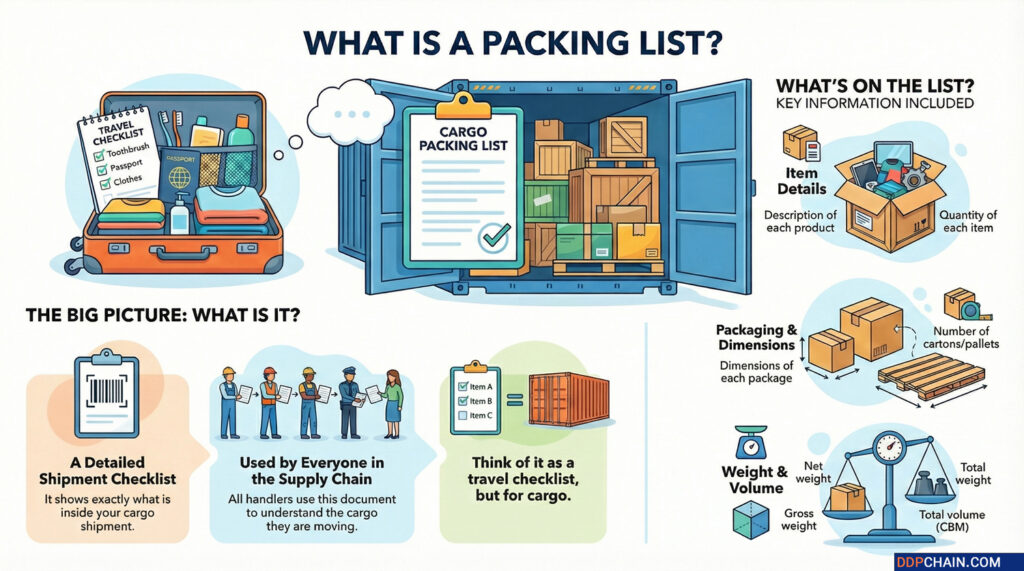
A packing list is a detailed checklist that shows exactly what is inside your shipment.
It is prepared by the supplier or exporter in China and typically includes:
- Description of each product
- Quantity of each item
- Number of cartons, pallets or packages
- Net weight and gross weight
- Dimensions of each carton or pallet
- Total weight and total volume (CBM)
A packing list is not just a checklist of items it is the document that defines how your cargo is measured, priced, handled, and verified at every stage of shipping.
Think of it like a travel checklist, but for cargo.
Everyone involved in your shipment uses this document to understand what they are handling.
Why Is the Packing List Important in Shipments From China?
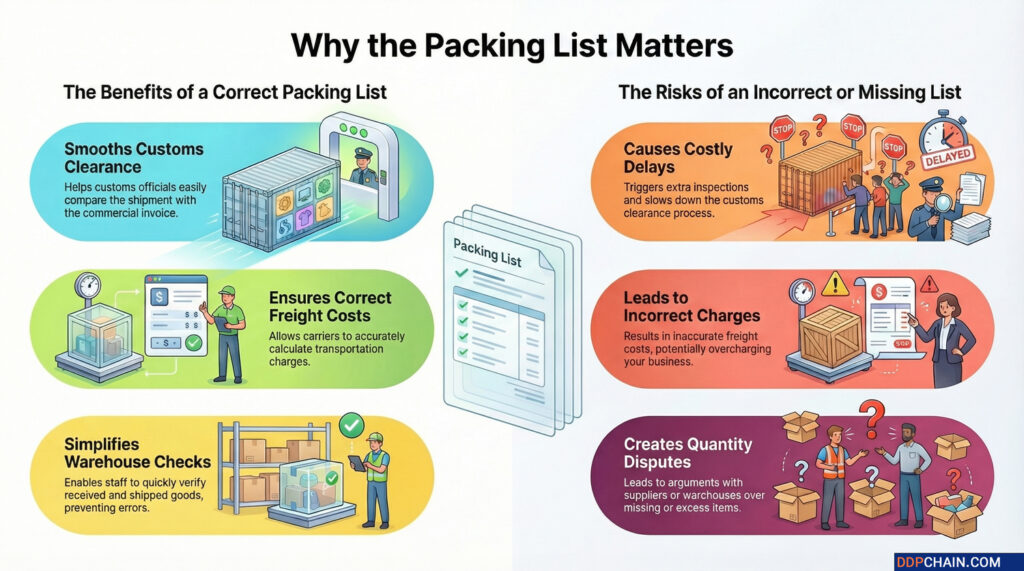
The packing list is a key document in international shipping because it:
- Helps customs compare the shipment with the commercial invoice
- Allows airlines and shipping lines to calculate freight costs
- Helps warehouses check what they receive and what they ship
- Reduces the risk of delays, inspections or quantity disputes
Even small discrepancies in carton dimensions or weights can change freight costs, affect space allocation, and trigger re-measurement during handling.
If the packing list is missing or inaccurate, you may face:
- Extra inspections
- Incorrect freight charges
- Clearance delays
- Arguments about missing or excess items
A clear packing list keeps your shipment predictable and reduces avoidable issues.
A Simple Example: Importing From a Chinese Factory
Imagine you buy Bluetooth speakers from a factory in Shenzhen.
Your order:
- 1,000 units
The supplier packs the goods and prepares a packing list. A simplified version might say:
- Total cartons: 100
- Each carton contains 10 speakers
- Net weight per carton: 7 kg
- Gross weight per carton: 8 kg
- Carton size: 40 × 30 × 30 cm
- Total net weight: 700 kg
- Total gross weight: 800 kg
- Total volume: 3.6 CBM
This information helps several parties:
- The freight forwarder uses it to calculate freight cost
- The airline or shipping line checks space requirements
- Customs compares the list with the invoice
- Warehouses verify that they received the correct number of cartons
If the numbers do not match, the shipment will need clarification before moving forward.
How the Packing List Is Used in Air Freight From China
What Airlines Look At
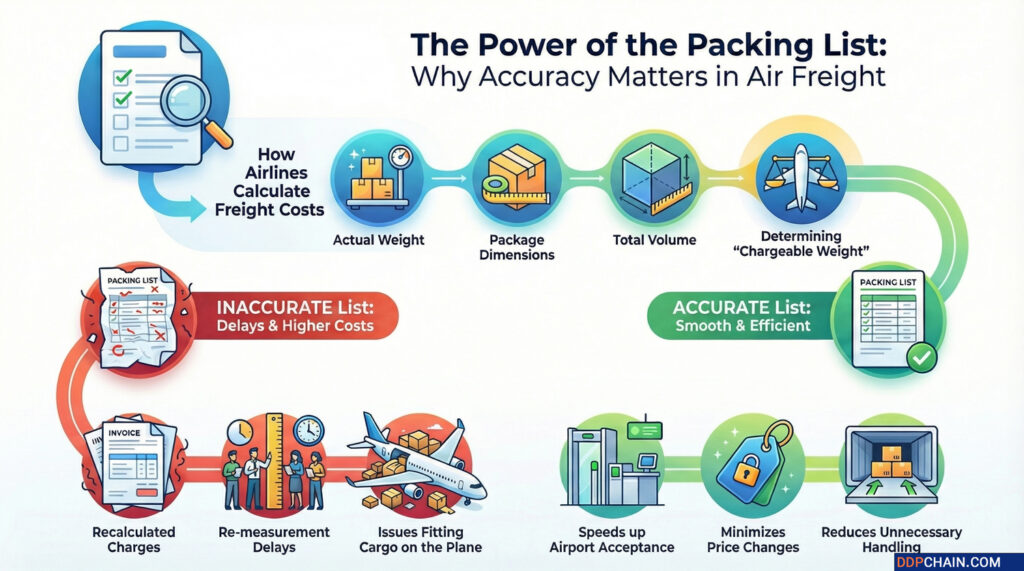
In air freight, space is limited and expensive. Airlines care most about:
- Actual weight
- Dimensions of each package
- Total volume
These values are used to calculate chargeable weight, which is based on either:
- Actual weight
- Volumetric weight
Whichever is higher is used for pricing.
Incorrect details may lead to:
- Recalculated freight charges
- Delays due to re-measuring at the airport
- Issues fitting the cargo into scheduled space
For freight forwarders, the packing list is the starting point for booking space, calculating chargeable weight, and planning how cargo will move through the supply chain.
Why Accuracy Helps
A well-prepared packing list:
- Speeds up acceptance at the airport
- Minimizes last-minute pricing changes
- Reduces unnecessary handling or repacking
How the Packing List Is Used in Sea Freight From China
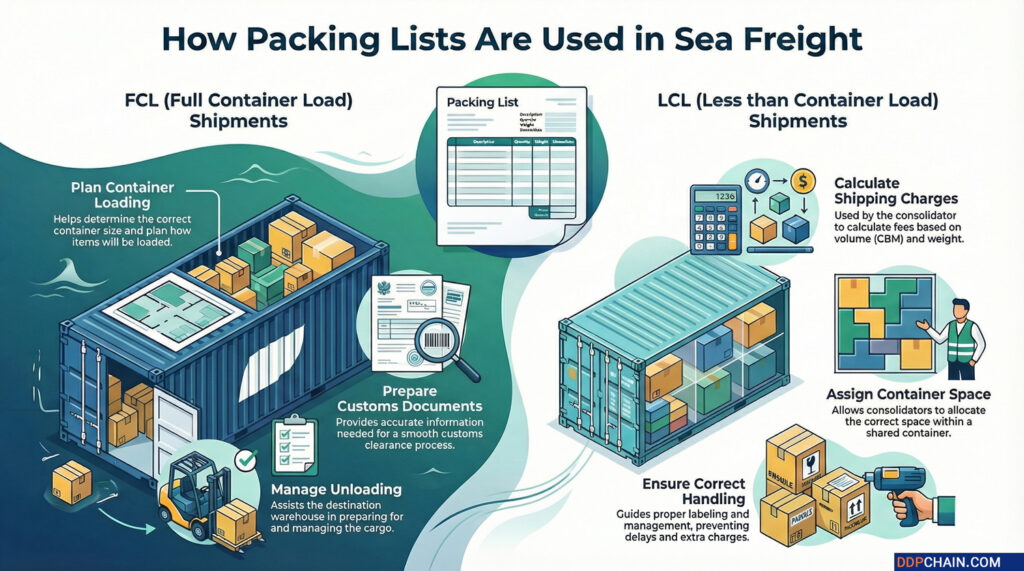
Both FCL (Full Container Load) and LCL (Less than Container Load) shipments rely heavily on packing list details.
For FCL Shipments
The packing list helps:
- Determine which container size to use
- Plan how items will be loaded inside the container
- Prepare accurate documents for customs
- Help destination warehouses manage unloading
For LCL Shipments
With LCL, your cargo shares a container with others. The consolidator uses the packing list to:
- Calculate your charges based on CBM and weight
- Assign space in the shared container
- Label and manage your cartons correctly
Wrong details can lead to extra charges or delays during unpacking and customs clearance.
Air Freight vs Sea Freight: How Each Uses the Packing List
| Aspect | Air Freight From China | Sea Freight From China |
|---|---|---|
| Main concern | Weight and volume for chargeable weight | Total CBM, total weight and container planning |
| Impact of wrong dimensions | Recalculated costs and airport delays | Wrong container choice and incorrect LCL charges |
| Typical use | Airline booking, cargo acceptance, customs clearance | Container planning, LCL consolidation, customs clearance |
| Sensitivity to errors | Very high | High |
Common Problems When the Packing List Is Incorrect
Frequent issues include:
- Wrong quantities
- Vague or incomplete product descriptions
- Dimensions that do not match the actual cartons
- Missing separation of net and gross weight
- No clear breakdown of units per carton
These mistakes can cause:
- Extra inspections
- Delays in customs
- Additional charges
- Disputes between buyer and supplier
Best Practices When Working With Chinese Suppliers
To avoid problems, it helps to:
- Request a draft packing list before shipment
- Make sure quantities match your purchase order
- Check that dimensions and weights look realistic
- Confirm consistency between packing list and invoice
A quick review often prevents long delays later.
Key Takeaways
- A packing list is a detailed summary of what is inside your shipment.
- It is essential for smooth shipping from China because carriers and customs rely on it.
- In air freight, it affects chargeable weight and booking accuracy.
- In sea freight, it helps with container planning and cost calculation.
- A precise packing list reduces delays, disputes and unexpected costs.